Sunday, May 17, 2009

Obstruction - One Step Closer

obstruction
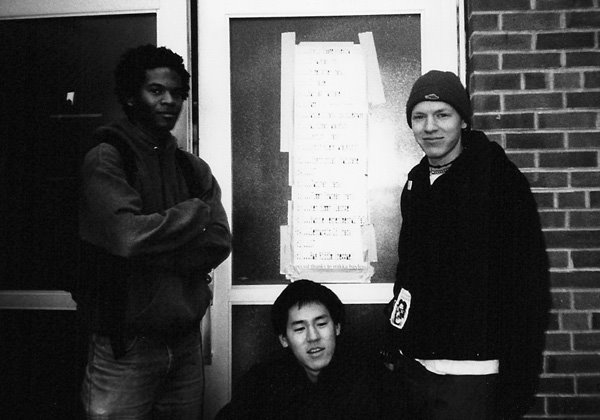
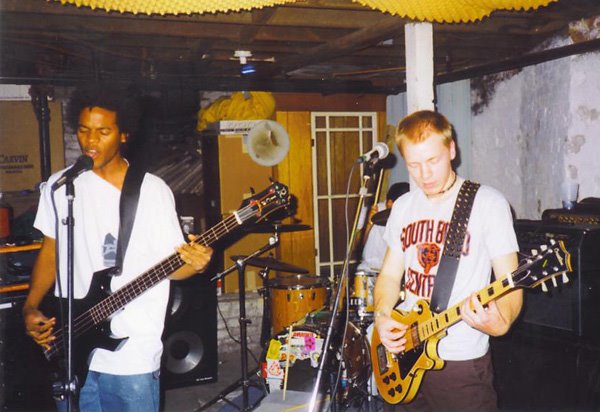
A hardcore band at Notre Dame?!? You better believe it! Ron Garcia, Andy Yang, and Ted Hennessy tell the tale of Obstruction!
Ted: Obstruction began back in the fall of 1996. I remember having written a couple songs on guitar that were a little too hard and fast for the Mad Dogs. Somehow I was referred to Mr. Ron Garcia (affectionately nicknamed "Hardcore Ron") who, unbeknownst to me, played a mean heavy metal bass.

Ron: I'm guessing Rachel referred you to me, since I think she's the only person who had ever seen me play the bass (in my dorm room, yadayadayada).

Ted: Actually, when I learned of this, I became quite angry. Angry because HC Ron had been on campus for over 3 years and was never invited to play in a campus band. I mean, seriously, what the hell?? Ron and I quickly decided we needed a way to focus this anger, and the best way to do that was to start a hardcore band. Thus began Obstruction.

Ron: I did consider trying out for Pinch Point once, but I never answered the ad they put in the Observer.

Ted: I think it was also Rachel who came up with the band name.

Ron: It was one of you two. I remember you saying, "Ron, we need to start a hardcore band named Obstruction!"

Ted: Initially, we tried Bear out as our drummer, but it didn't quite gel. I think we scared him off by playing our songs so fast that we could barely keep up with them ourselves. That's when we enlisted a man with the guns to fill the bill: Andy Yang, a refugee from the recently defunct Catatonics.

Ron: Damn straight.

Andy: I don't think I ever really kept up with the hardcore tempo, but I had a damn good time trying. I pretty much improvised a fast tempo drum beat that seemed to have a mind of its own at times, not always in time and far from perfect. I remember having to screw some wooden blocks to the carpet that my shitty drum set was on to help stabilized the damn thing to keep it from running away.

hardcore ron
Ted: And then there was Ron's singing... I think this surprised the shit out of everybody. Here was this sweet, super-soft spoken young gentle-man... who was suddenly transformed into a font of fiery onstage screaming rage. Wow. A pleasant surprise indeed, with very, very effective results.

Andy: That was the best part of Obstruction! Ron's piercing yell ruled!

Ron: Our first show I don't remember if the PA was working, so I'm not sure if anyone heard the vocals. The second South Bend show (at Clifford) got some stares. I didn't know I had it in me.

obstruction first show
Ted: Yeah, the first show... it was on the same night as the last Cuba Five show (3/13/1997). We were booked for a Bowling Green, OH fest a week or so later, so we really needed to get some stage time under our belts. We played about 6 songs, in arguably one of the shortest sets in South Bend music history. Most of the songs were under 2 minutes long. It was the only time we ever played "Shenanigans," an ill-conceived instrumental "tribute" to the ND song and dance troupe of the same name.

Ron: Hahaha! Awesome. Many strings were broken at that first show (bass strings, guitar strings). Drum sticks? We tore shit up!

Andy: Good times! Yeah, I remember being pretty pumped up and racing away on the drums. We definitely upped the tempo even more at the shows.

obstruction at BG 1
obstruction at BG 2
Ted: BG fest was fun, even if we were a trifle nervous and screwed up a lot. It was a good sized crowd. Chris O sang a few extra songs with us there as some hacked off version of the Mad Dogs.

Andy: Yes, our first gig away from SB and it was our second show. We weren't really prepared, but it was fun, for sure. We were definitely feeling the jitters and screwed up good, but all in all, a good time.

Ron: I remember we didn't have a carpet so the drumset kept trying to run away.

Ted: We probably only played a handful of other shows from there on out, a few times at Clifford and maybe the Green House. Obstruction dissolved when I left South Bend for the greener pasture of Austin, TX in the summer of 1997. Several months later, I stopped back in town for a tape release/reunion show at the Canary House on Halloween, with the Mad Dogs and the Butterfly Effect.

Ron: That was an awesome reunion show.

Ted: Indeed. Probably the best we ever played.


"Obstruction... GO!!"
Track Commentary

1. Eyesore
Ted: Though often oversimplified, we tried to add "political" overtones to our music. "Eyesore" had something to do with television inadequately reflecting the diversity of real life.

Ron: Hardcore bands (and angsty youth in general) have traditionally oversimplified their politics. Who were we to shirk years of tradition?

2. "Stabbed in the Back"
Ron: Poking (pun intended) fun at the classic hardcore motif: "I thought you were my friend, but now you've stabbed me in the back." Plenty of bands singing about their bleeding hearts spend their weekdays dishing out the same medicine they complained about in verse on the weekend.

3. Holy Martyr
Ted: Written in reaction to attending too many HC fests overrun by macho, sexist, straightedge buffoons.

4. Vicarious
Ted: Don't ever try to tell Ron what to do with his life, unless you want the beatdown! Clocking in at only around 30 seconds, this song was often over before people knew what had hit them.

5. Badge
Ted: The lyrics to the verses of this song were taken from quotes on redneck bumper stickers I witnessed during my days as a pizza delivery guy in SB.

6. Gunshot
Ted: Our anti-joining-the-military anthem, or something like that. Always a crowd favorite due to the mid-song guitar breakdown and shouting of "Go! Fight! Win! Die!"

Ron: Let's not forget the absolutely crucial "Obstruction Go!" You can't be old school without throwing your band name in at least one of your songs!

Andy: My favorite song to play. I was able to just beat the shit out the drum set, broke a few sticks here and there.

Ted: This song was initially titled "Gun Shy," until it was brought to our attention that that was also the name of a 10,000 Maniacs song. Whew-- dodged a bullet on that one. (ba-dump bump!)

7. Underscore
Ted: "Underscore" and "Last Goodbye" were written towards the end of the band's brief existence, but showed promise of where our sound was heading, had we continued on.

Ron: Underscore was named because it was an untitled instrumental that we put on setlists as "_______". Apparently my sense of humor has little progressed.

8. Last Goodbye
Ron: This was the obstruction love/heartbreak song. Hey, hardcore bred emo, so we HAD to reveal our tender sides for the fans.

Ted: I'm glad we nailed this one in the studio, because we always struggled with it live. You can hear Andy exclaim at the end "that was the best ever!" cuz we finally got it right! For me it's the highlight of this tape.

obstruction live

Ted: This cassette, tongue-in-cheekily titled One Step Closer, was recorded in May of 1997 at Clifford the Big Red House, with Travis assisting under Ron's direction. Faye, Leslie, Doug, and Mike (aka the Obstruction Youth Crew) helped with the background shouts on a couple tracks. It was a split release with our good friends the Mad Dogs, who's contribution has already been chronicled in a previous blog post.

Ron: Here's a point of irony. I've lost my voice for the third time in my life this weekend (due to a cold). The last time I remember losing my voice was when we recorded the Obstruction tape. During the vocal recording session, Mike Larmoyeux was running the sound board and I was in the basement screaming my heart out. It was graduation weekend so his family came by Clifford while we were recording. As Mike told me, they seemed perplexed, so he explained that we were overdubbing tracks for a recording, and I think his mom, or aunt or some other said, "But why is someone yelling in your basement?!?"

listen/download:


see also:
Obstruction on MySpace

Wednesday, May 6, 2009

The Transoms - The Weather is Here... Wish You Were Beautiful


I used to tell people I named my band “The Transoms” because “we’re like the Doors, but higher.”

I simply present that here for historical documentation purposes.

After a few lineup changes, where I was the sole remaining original Transom, we settled on Ron Garcia on drums and Sean Markey on bass. I played guitar and sang.

Ron, Sean and John. We rhymed. It was almost too perfect.


Except that Ron wanted very little to do with the band. After the first drummer, Jeremy, vanished from the face of the earth, Ron filled in for a few shows, making it quite obvious that he wasn’t interested in being my full-time drummer. With almost weekly cajoling, he played every show thereafter for two years.


Well... every show except for that one where I played drums and sang, while a superfan from my dorm, who happened to already know all our songs, played lead guitar. That show was terrible. Like, really bad. I’m no Phil Collins, and Phil Collins fucking sucks.

Our CD, The Weather is Here... Wish You Were Beautiful was recorded in summer 1999, over the course of one sweaty week in Ron’s house on Bulla Road. Sean couldn’t make it out from Springfield, Mass. for the session, so I played bass, in addition to guitar and vocals. Ron, still doing his damnedest to not actually be in the band, only played drums on a handful of tracks. I talked Doug McEachern into playing on the rest. I remember the idea piqued his interest, because he’d never been asked to be a “session drummer” before.

But anyway, 15 songs. All of them went on the CD. A friend suggested the album’s title, but it was only after the cover was printed that I learned it was a fucking Jimmy Buffett song. You got me.


The Transoms’ CD was reviewed twice, as far as I know. The student newspaper The Observer raved about it. Five out of five shamrocks. It began, “In the long tradition of incredibly talented Notre Dame campus bands, the Transoms have joined the ranks of the elite with their first album the weather is here... ...wish you were beautiful."

That’s right -- the elite. But read that review and one thing is for sure: The guy didn’t spend a whole lot of time composing it.

Case in point: “‘Cosmetic Surgery’ is one of the best tracks on the album, with its great musical transitions.”

Yeah, that’s right. Motherfuckin’ musical transitions. That’s going on my resume starting tomorrow.

Even better, the review’s headline, “Music of The Transoms is Awesome,” was a total mistake. Turns out, the page designer plugged in a dummy headline to determine the font size, but never returned to fix it.

The South Bend Tribune writer spent a little more time with the album, but it baffled me to no end that he compared our “rough-hewn sound” to “early Who and Joe Jackson.”

Joe who?

Yeah, that’s right. I had no idea who Joe Jackson was at the time. Oh, you mean that guy who wrote “Is She Really Going Out With Him?” That guy? Great.

My favorite line from that review was when the author said the CD was “seven to 10 minutes too long.”

Touché, my good man. Touché.

Track commentary:
1. When We Were Cool - The guitar solo was quite challenging, and I think I nearly ruined a friendship by practicing it for an hour straight while my roommate tried to nap.
2. Cosmetic Surgery - I wrote that in high school, but reinvented it with a guitar solo for the Transoms.
3. Anywhere to Be - Written in Alumni Hall. One of the proudest moments in my life was when The Butterfly Effect wove part of this into one of their songs at their last show ever.
4. Story in Past Tense - 3/4 time.
5. Poor Diction - About as punk as we got.
6. Maroon & Blue - This was about a girl I was trying to woo, if you can believe it. Not surprisingly, she was alternately puzzled and turned off by it.
7. How Little Feels - A guy in my dorm heard me fucking around with the main riff and announced that it captured “the way I feel.” His name: Scott Little. Therefore, this song is How Little Feels.
8. Make it Dance - Written as a reaction to one of Doug McEachern’s essays in his ‘zine, “A Boy & His.” Then he ended up playing drums on it.
9. Sharing Kisses - Totally not as emo as the title suggests. False start intro was a nod to the fact that it took like 12 takes to get it on tape.
10. The (New) New Nathan Detroits - An acoustic cover of my favorite Braid song, but significantly changed.
11. Butter Slippery - Another song about a girl. This one was also misunderstood. I abandoned songs about girls after this.
12. Throwing it All - There was a guitar-virtuoso guy on my floor who loved this song and used to play it on guitar all the time. That was the pinnacle of musical flattery for me.
13. A Horrible Joke - I played drums. I remember Vinny Carrasco sitting in the backseat of a car and saying, “I liked every song except for Number 13.” Thanks a lot, jerk!
14. Plastic June - Probably played live twice.
15. Generic Love Song - Written in about 15 minutes, this song was probably our most well-known. I should have learned a lesson there.

--John Huston
johnphuston.com

listen/download:

Tuesday, April 28, 2009

Faye, Leslie, and Shelley


Okay fuck it. Here goes, you scoundrel, Ted, you...

Mostly, from my jaded feminist perspective at that time, the real reason I'd go hang out in those basements had to do with the hot grrls who hung around those there parts, the girls I respected, made art with, and played music with. The guys makin noise on stage were exciting, yes - well maybe, but definitely secondary in my realm. (sorry, no offense fellas, you know I love ya) (truth hurts) (smile)

It was the nineties, oh yeah, baby. I played djembe, West African hand drum made from a tree trunk. I was all hippie dyke grrl, givin the big middle finger to Notre Dame town. And then there was Leslie Morelli on bass - one wicked strega girl, Faye on electric guitar - one bad ass Texas mutha fucka (don't mess with her) (or I'll mess with you), and Zoe Marin on the occasional keyboard, rockin it stylishly hard core, fighting off the idiots in the crowd like kali-ma. Quite the bunch. Smart, hot, full of feminist 'tude, and ready to dish it out. Or rather dig it out. Thanks to Faye, I was turned onto Sleater Kinney. Grrl math rock was instant love, especially due to the interesting link to the polyrhythmic music West African music I had been working with. Faye, Leslie, Zoe, and I were all friends and hung out. We started playing music together, seeing what would happen with the mixture between base/electric sound and djembe. Simple as that. We had a handful of songs - rhythmic, tight, and full of a deep, drenching spirit. Most songs were instrumental and raw, though some tackled conceptual issues such as racism and sexism, with few, yet acute lyrics.


If I could describe the music, it could be compared to a rolling train of feminist punk rock, smooth, yet charging, driving. Deep and raw. Mixing grrl rock and African percussion was an experiment, and a good one. The shows we had were in dingy basements, where all the punk boys would make noise and try to make a difference. Party atmosphere and a lot of fun. (Must now mention the memory of when I was on the trap set with y'all to "Oh Mickey You're So Fine") (that was fun and funny)

The bands at the parties were 'decent' musically, yet quite exciting. Mostly guys, though. Some of the feminist 'cool' guys were totally supportive of the girl band 'air-time' so that was good. I do remember, however, a few times men in the crowd jeering and uttering sexist, negative remarks while we played - specifically once when Zoe was tearin it up. Too bad for that and I wonder which one of us tore his head off. (Remember-- this was South Bend, Indiana - Notre Dame's catholic town, mid 90's. Fun times at dick-mount high) If anything could sum up my memories of what fueled the solidarity with these women and our music at that time, it would be that last sentence.

--Shelley


The five songs from this cassette were recorded at Clifford by Ron Garcia in the Spring of 1997. This is another set that never saw any official release, but rather a few copies just passed around here and there. Enjoy!

listen/download:


see also:
Faye, Leslie, and Shelley on MySpace

Tuesday, April 21, 2009

The Butterfly Effect - Those Lights We Call Stars

This album stretches the boundaries of the Power 90s slightly, since it was recorded in March 2000 and actually came out a few months later. Ron masterminded the recording once again, and we enlisted the help of a number of friends to run the board while we made our joyful noise downstairs. The cover art was done by Chris Stackowicz, who raided the bookshelves of his roommate at the time, who was a physics major, in order to come up with the equations that model the birth and death of a star. The band photo was taken by John Huston the morning after the show we played with The Transoms in Champaign, IL. Ian Lynam printed the covers and tray cards. The title of the album comes from the poem "Tomorrow" by Raymond Carver.

A bit of track-by-track analysis:

1 - Do They Still Call It Rock and Roll?
Doug: I played this song on guitar for my housemate at the time, who was a physical therapist, and he said I was going to get repetitive stress injury in my wrists judging by the way I played.

2 - The New Gods of the Underground
Doug: The first of the songs rerecorded from Now Everybody.

3 - The Idiots Dance
Doug: The second of three songs rerecorded from Now Everybody. This version features Ron on vocals for the verses. The surprise is that our voices sound remarkably similar.

Ron: I remember that The Idiot's dance was about...well...the idiot's dance, that being moshing. I found it ironic (or maybe in retrospect I apply more smarts to my younger self) that the "grunge revolution" which led to people moshing for anything and everything, is partly to blame (at least in Joe Cannon's opinion way back when) for the rising interest in indy music that hit Notre Dame campus back in the 90s. Chisel was able to feed off of that zeitgeist, and a few young'uns looking for a place in ND college life found a community and a rather empowering voice.

4, 8, 11 - "..."
Doug: Tracks 4, 8, and 11 are instrumental bits culled from jam sessions during the recording. They were unlisted on the actual CD. I've always used "..." as a title for them, which is what David Foster Wallace used in his novel Infinite Jest to indicate a pause in conversation.

Vinny: I think its interesting that jam tracks are referenced to a "pause in conversation". To me, the jam tracks, which were improvised, represent the only true form of musical conversation. Performing and recording pre-written songs are more like recitations of beautiful poetry. Improv is conversation.

Doug: I tend to view improv as where you are working out your ideas that you want to refine into a finished form (for varying values of finished) before you present them to an audience. A pause in conversation is where you are thinking about what you want to say next and working out ideas (via an internal monologue) to refine them into words (in the external dialogue). I would say that improv is more of a conversation between the members of the band (an internal dialogue), whereas a performance is (or should be) part of a conversation between the band and listeners (an external dialogue).

Vinny: Improv is indeed a conversation between the members of the band. It can also be used within the framework of a finished product (Umphrey's and Ali Baba's did this well, I thought). I like the idea of the performance as a conversation between the band and listeners. There seem to be times however, when the audience doesn't really get it. Is there really external dialogue going on when people are just like, "Huh?" and not really listening?

Doug: If the audience doesn't get it, then the attempted dialogue is failing, just like when you try to talk to someone who either has no idea what you're talking about or simply isn't interested in having a discussion.

Vinny: And that's when Moe pulls the plug!!!

Ron: The jam tracks jump or fade into the middle of music that was already ongoing and then jump back out, I really like that, and the rawness of them makes it feel like a peep behind the scenes. While we didn't write songs by turning jams into compositions, we did refine Doug's song ideas into Butterfly Effect songs by playing them and playing with them until things fit together right.

Those particular jams were us playing with each other. We didn't jam in public as a band, but rather amongst ourselves, in an otherwise empty basement.

5 - Making Out at the Movies
Doug: The title is for Amy Bowman, who had never made out at the movies. Most of the lyrics stem from the fact we were playing an acoustic show at Lula's on Valentine's Day weekend and I wanted to finish the song for that show, so I figured it might as well be thematic.

6 - Cigarettes, a Phone Call, and Change
Doug: This may be my personal favorite Butterfly Effect song. The third verse references the lyrics to "Fireball" by Algebra One. I emailed the lyrics to Tyler, Algebra One's singer, and he said having his lyrics quoted in another song were about the best compliment he could receive as a songwriter.

Ron: I remember not really liking "Cigarettes..." as a song until I heard it recorded for the CD. Then it all fit together, lyrics and music, and gave me chills. Still one of my favorites now. It's funny what hearing your own music through heavy earplugs, stage fright, and reflections off of the back walls of sketchy venues does to your appreciation for your own art.

7 - Miniature Spacemen
Doug: This is about watching Josie Vodicka (still performing as Josephine Cameron) play at Lula's. The title comes from misremembering the wording of a photo on the flyer for the show.

9 - True Patriots Wear No Uniforms
Doug: On just about everything I've recorded, there is at least one song I want to skip on every listen. This song earns that dubious honor on this album. It was supposed to be a tribute to Phil Ochs, but I just don't think it works.

10 - A Laughing Matter
Doug: The only song for which I've written out guitar tab.

Ron: A Laughing Matter was probably our most folky and nostalgic song. I love it. It brings to mind the sweet reminiscent bits of Billy Bragg that heavily influenced Doug. I remember watching Doug play Billy Bragg songs at acoustic cafe my freshman year, before I really knew him.

12 - The Counterforce
Doug: The title references the final section of Thomas Pynchon's "Gravity's Rainbow". God, I was obsessed with that book for a while. This song is actually responsible for what may be my favorite recording story ever. When it came time to do the guitar overdubs for this and "Do They Still Call It Rock and Roll?", I enlisted my friend Andrew to run the 8-track for me while I ran down to the basement to play my parts. In order to check levels, I had Andrew put the guitar on and told him to make noise while I went upstairs to adjust the appropriate knobs and sliders. I walked downstairs to find Andrew grinning madly and saying "Wow, this is fun. Now I know why you guys like doing this so much." He went upstairs, we ran through the necessary takes, and I went back up to tell him we were finished. He said, "You're done recording? Cool. I'm gonna go be a rockstar some more!" and proceeded downstairs to continue making noise with the guitar.

13 - Twenty-three on Twenty-four
Doug: Also rerecorded from "Now Everybody", but this time we played it right all the way through. One of the guys from Clark told me he put this song on mixtapes, which I took as a tremendous compliment.

Vinny: I do remember that many of the songs were recorded in just one take. We didn't just practice to sound good at shows, I LOVED practicing. We rarely practiced parts of songs, we mostly just played songs all the way through until we were all happy with what we were doing. So when it was time to record the songs, we pretty much just nailed them the first time. "Twenty-three on Twenty-four" was one marked exception. I recall that it took a lot of takes to get the one we were happy with. I think we even stopped at one point and went on to another song due to frustration with not getting it right. It was mostly my fault the first few takes, and then we all started screwing up. In my mind it was worth it because that is my favorite song on the album. I'm still as proud of that recording as any song on any album I've recorded before or since then.

Ron: Twenty-Three on Twenty-Four is one of those songs I loved to play. It has some great rhythmic idiosyncrasies that just work, and I always like rhythmic and tonal idiosyncrasies, and energy shifts throughout. Very dynamic. It's funny today to read a song title about the passing of time now that I'm Thirty-Three on Thirty-Four.

14 - The Long Way Home
Doug: We played this for the first time during our one show in Memphis. One of the guys from the local band complimented me on the song right after we finished. Mike Larmoyeux said he was impressed to hear the crowd singing along to this at the last Butterfly Effect show. Vinny sings back up on the last five lines.

Vinny: The Long Way Home was my favorite Butterfly Effect to play live. I do still remember the crowd singing the lyrics at the last show. I was also screaming out the chorus and almost started crying during the song. I forced myself not to because I knew I wouldn't be able to play and cry and sing at the same time. Certainly a defining moment in my life. I have since been able to sing back up vocals for many bands while drumming. That was my first time trying it.

15 - Killing This Town (unlisted track)
Doug: That is John Huston saying "Rolling" at the beginning. This song was originally unlisted on the CD because I intended to put out A Boy & His 8 at the same time as this album, and my entry in that issue was the lyrics to this song. That turned out to be one of many plans that didn't quite work out in the spring of 2000. So it goes. I remember writing the first line of this song as a specific reference to the first line of "Do They Still Call It Rock and Roll?", but I don't remember being conscious of having the first lines of the opening and closing tracks mirror each other.

16 - Do They Still Call It Rock and Roll? (Solo version - special SBP90s blog-only bonus track)
Ron: So how did this bonus track become part of this post? Well, I recently headed over to SouthBendPower90s central (i.e. Ted and Faye's home) to remix The Go Lightly's for posting to the site. In my box of 8-track tapes from back in the day I found one titled "Dougie-Pooh's 688 adventure" (the 688 being the 8-track). Of course I was intrigued, so I threw it in, cued it up, and found this wonderful re-(or pre-?) interpretation of the song. Ted and I agreed that this piece had to surface. I think it does a good job of capturing how Doug's songwriting for electric guitar is influenced by the acoustic. Doug once told me that when he was a kid his dad would walk around the house playing the Beatles on an acoustic guitar. Could this have had an influence on a young Dougie-Pooh? I think so.

Doug: I believe this is from 1998, when the song was first written. You can hear me trying to work out just how to fit the lyrics to the music. And yes, I was certainly influenced by having my dad play guitar around the house all the time when I was a kid. However, pretty much all of my songwriting (especially for this CD) was actually done on an acoustic guitar, since that is what I had with me in my apartment. My electric was always over in Ron's basement, where we practiced.


listen/download:

(The Bandcamp download contains the songs plus a plain text version of the CD booklet, with lyrics, credits and what not.)

see also:
The Butterfly Effect on MySpace

Thursday, April 16, 2009

SBP90s blog featured in today's Observer

Hot on the heels of the recent re-post here of an Observer article from 9 years ago, the South Bend Power 90s blog is featured prominently in The Observer today! There's a full spread highlighting the blog and the 90s scene, as well as commentary on the decline of indie music on campus in the 2000s. Head on over and check it out!

The Observer (Scene section) - 4-16-2009

or download the spread in PDF:
"Golden Age of Music Under the Dome: Student Bands Then & Now"

Thanks to The Observer for giving us props!

Saturday, April 11, 2009

The Butterfly Effect - Observer article, April 11, 2000

(Note: In advance of the upcoming blog post for the Butterfly Effect CD, Those Lights We Call Stars, it seemed appropriate to revisit an article that bears some significance to the specific time period in which that album was created. This piece tells the tale of the Butterfly Effect, relates a little of the history of the South Bend/Notre Dame music scene, and arguably hearkens to the end of the "Power 90s." The article ran 9 years ago to the day that this blog post is being published.)

"Forever keeps getting shorter" for campus band

Scene offers an in-depth perspective on the life of the Butterfly Effect and the individuals within it. The band's future, as the quote from their album says, is forever getting shorter. They will be playing their last show on April 15.

by John Huston

The stairs leading down to the basement of the Hive are precariously old and worn. One step in particular wobbles a little too much for comfort, especially if you are going back down after refilling your cup of beer at one of the monthly parties held there.

Tonight's party is hot, as parties here usually are. The stone walls are wet and the room is dark — lit only by some Christmas lights dangling above the band at the far end of the room. The stone walls bounce the grinding music, making it even louder and more ear-splitting.

Tonight's performance by the Butterfly Effect is typical. When the local band first started playing live shows, singer/guitarist Doug McEachern screamed so hard that by the fourth song his voice was a harsh grumble, barely able to hit the right notes. It didn't matter, though. Butterfly Effect songs have always had more to do with feeling than with tunefulness.


Tonight, the Butterfly Effect plays another energetic and emotional set. Those lucky enough to be in the basement stand, watch and listen. A girl in a long skirt dances by herself off to one side. A few people even know the band's lyrics and sing along. Each song's end is met with approval from the observers. It's not just polite clapping. It's a sincere thank you for sincere music.

Although Doug has learned restraint in the two years since that first show, Butterfly Effect performances never lack intensity. Doug — a shy, awkward and nerdish looking fellow during the day — transforms into a firecracker of punk angst during performances. Drummer Vinny Carrasco bounces around behind the drum set, singing along with Doug, while bassist Ron Garcia sways back and forth with his feet firmly planted, concentrating on perfectly laying down each song's foundation.

Most of the Butterfly Effect's performances are here in the basement of the Hive — otherwise known as Ron's house — about a mile east of the Notre Dame campus. It developed the nickname because of the basement's cave-like appearance. The combination of three dollars for beer and three or four bands is usually inviting enough to attract 75-100 people.

Most people don't dance at Butterfly Effect shows. The kind of motion the band coaxes out of an audience is at most a bobbing head to keep time or a gentle sway in rhythm with the music — as gentle as a butterfly flapping its wings...


chaos theory

The term "butterfly effect" comes from scientist Edward Lorenz's Chaos Theory. It states that a small force, like the flapping of a butterfly's wings in the United States, can result in a large reaction, like a tidal wave or a tornado halfway across the planet.

The Butterfly Effect, (the band) is likewise, a small force. They have never been seen in performance by more than 200 people at a time, and occasionally they have been seen by as few as four. They made only 100 copies of their self-released first album, Now Everybody.

The difference between this band and the countless others in the country is that the Butterfly Effect could truly cause a large reaction. Through the swirling, distorted tones of Doug's guitar comes true music. Vinny says there is a basic difference between most small-time bands and the bigger, more popular ones. "It's usually just more honest," he says of small bands. "And if you're a musician you can hear that."

Singer/guitarist Doug McEachern explains his fascination with chaos theory this way: "It's just kinda neat how all the little decisions and actions you make add up and make big changes over time, which is really what the butterfly effect scientifically means — sensitive dependence on initial conditions. Or if you just slightly vary the input of a complicated system, you get wildly different results."

Both McEachern, 25, and bassist Ron Garcia, 24, are math and science nuts. They both majored in engineering at Notre Dame, where they first met — Doug was in mechanical engineering and Ron was in electrical engineering. "The band name preceded Vinny," Garcia says. Drummer Vinny Carraso, 26, is the lone liberal arts major, concentrating in political science during his undergraduate time at Notre Dame.

Although McEachern says, "our songs would be the same no matter what we were called," the title is still an apt one.


setting the stage for memory's play
— "Morgan Returns East," Now Everybody

Doug McEachern spends most of his mornings working as an assistant manager of Lula's — a coffee and sandwich shop near campus that he describes as "decidedly eccentric." When he first applied for a job there, he was rejected. But once he got his foot in the door, he worked his way up to his current position. The lights at Lula's are dim, the walls are covered with local artists' work and soft jazz provides the ultra-hip background soundtrack.

Notre Dame isn't known for its diversity, especially in regard to artistic people. Few Notre Dame students start bands, and they generally don't like bands that write their own music. "I kinda lucked into meeting a bunch, this whole group of people, the first weekend, the freshman orientation weekend, who were all into punk and whatnot," Doug said.

Then, an event helped direct his focus: Chisel.

"At the end of October there was this 'farewell to Bush' party, right before Election Day. It was just kind of a preliminary celebration of Bush being voted out," Doug tells. Campus bands Grope for Luna, the Sister Chain and Chisel were scheduled to play outside at the Fieldhouse Mall. Doug didn't know much about any of them.

He watched Grope for Luna for a while, then walked across North Quad to eat dinner at the dining hall. When he came back, he saw some of the Sister Chain set and wasn't impressed. Unenthused, he went up to his third floor room in Cavanaugh Hall, which is adjacent to where the bands were playing. "I just heard that distorted harmonic sound. 'Sounds like someone tuning... Sounds like a punk-style band tuning.' So I went down and it was Chisel and I was all, 'yyyeeeaaahhh!' "

Chisel was a very popular indie-rock campus band that played original material. They were the inspiration for countless other similar-minded campus bands at the time and the backbone of the local scene. If it weren't for Chisel, the Butterfly Effect might not exist.


the storyteller killed the scientist
— "Science Killed the Storyteller," Now Everybody

Although he graduated from Notre Dame in January 1997 with a mechanical engineering degree, Doug is intent on never using his engineering training. Writing fiction, not music, is his main interest nowadays. He cites authors like Raymond Carver, James Joyce, David Foster Wallace, Kurt Vonnegut and Ernest Hemingway as some of his favorites. In fact, the upcoming Butterfly Effect CD, Those Lights We Call Stars, borrows its title from a Carver poem.

He has self-published a 'zine, called "a boy & his," sporadically since December 1995. In it he writes autobiographical poetry and stories. The material is strikingly honest and open. It's almost like he's selling his diary for 50 cents a pop to anyone interested enough to read it.

His lyrics, too, read like a diary. "I think lyrics are key to the music I listen to... I tend to connect mostly to the lyrics in music." Doug refers to Carver when he says that "good art is more than just self-expression, it's communication... where you are not only getting across how you feel, you are getting it across so well that the other person understands and feels something too."

Ron puts that notion another way. "Music is a way to communicate... feelings, thoughts... while everyone doesn't get them exactly as you sent them out, they still get some insight."

Ironically, as the Butterfly Effect prepares to record its follow-up album, the band's imminent breakup looms in the near future.

"I'm just ready to leave South Bend," McEachern explains. "I've been here for seven-and-a-half years."

Vinny looks forward to leaving South Bend too, someday, but he generally holds South Bend in higher regard than most. "If you really want to, you can start something here. Something good can happen here that doesn't exist yet. I think I'd rather do that than go somewhere where there's already a lot of cool stuff going on."

The biggest problem for Doug is that his girlfriend lives in Portland, Oregon. That's the main reason why he's moving there in April. He says he wants to "have a somewhat settled life for a little while, at least with Meghan, instead of two years of living 2,000 miles apart."


rich and extravagant lifestyles

For the past two years Doug has been using his engineering degree to make sandwiches and coffee at Lula's and deliver pizzas for Pizza Hut. He doesn't have health insurance but there's a clinic downtown where he gets dental checkups for $5. He is still paying off school loans. Vinny works for a local center that helps children with disabilities. Ron is still going to school.

So how do the members of the Butterfly Effect afford their rich, extravagant lifestyles?

"Don't ask me questions about money. That's boring... I make very little," Vinny says.

"We don't live rich, extravagant lifestyles!" Doug emphatically adds.

"Yeah, hardly," Vinny agrees. "I've never even eaten at the LaSalle Grill! I dated a couple waitresses, but I never got to eat there."

Money is no big deal for this trio, though. Happiness comes from other things for them.

"I like my life very much. It's largely in my own control," says Doug.

Vinny agrees. "I enjoy my life, it's interesting."

Not even the possibility of a potential record contract or tour would change Doug's mind about moving away from South Bend and abandoning the Butterfly Effect, he says. "It's not what I really want to do right now... I couldn't be in a full-time touring band... It's not worth it to me to deal with that right now."

"Would you like to be in a full-time touring band?" I ask Vinny.

"Yeah, I'd go on tour and play for crowds of 15 every night, sure!" he responds.

Doug bursts into laughter at Vinny's sarcasm. "I really want to go though," he continues. "I really wish the Butterfly Effect could have gone on more outings. I think it's the best band that I've been in. I would have liked to tour around."

All of a sudden, Doug is silent. He realizes that Vinny wasn't being sarcastic — he really wouldn't mind playing for crowds of 15 people, if the strength of the music made it worthwhile.

"I wish I was in a position where I could focus on promoting and getting shows." Vinny says. "Since I don't, there's no point in pouting about it. It's pretty good, what we are. I'm happy with it."

"There've been times," says Ron, "where I would have been very excited to tour with the Butterfly Effect... The idea of touring with a band and meeting new faces would be great."


is our message getting through?
— "The Idiots Dance," Now Everybody

"You're the old man of the group," Doug says suddenly to Vinny.

"I am? I am, aren't I!" he responds.

Vinny, like Doug, has played in his fair share of bands in the past and currently plays with three other groups besides the Butterfly Effect: a backing group for a gospel choir, a jam-oriented band called Driftwood and an African dance group.

In fact, if you ask Vinny to name his favorite band, he responds with a Who's Who list of past and present local bands.

Except for Slint, all the bands he says he listens to are products of Notre Dame — Pinch Point, Chisel, Sweep the Leg Johnny, Cod in Salsa and Umphrey's McGee. It reinforces his belief that music on the local level is often more honest and direct than larger bands' music, which is, often times, written with the main goal of making money.

"All rock music, my mom would say, is basically the same," Vinny explains.

What would he say?

"It's way different to me."


the last ones standing
— "Last One Standing," Now Everybody

"I guess you can say that I'm throwing in the towel," Ron says. For the past five years, he has played an important role in the music scene at Notre Dame. He and Doug throw Hive parties at his house almost monthly and allow local bands to play alongside larger, touring bands who stop by from time to time — bands like Braid, Sweep the Leg Johnny, Lynx, Kind of Like Spitting and others. Ron used to be the chief engineer at WVFI, the campus rock radio station where Doug and other fans of indie music made friends. Ron still periodically runs the soundboard for various on-campus concerts, such as AcoustiCafe. He also owns $3,000 to $4,000 of recording equipment that he uses to record local bands.

Ron, who is usually more humble than necessary, even acknowledges his important role in the scene. "If we hadn't been throwing shows and having people play in our basement, let alone writing music, I think things wouldn't be the same as they are now."

But steadily, since the three boys of Chisel graduated, things have started to dwindle. "There were more bands... at least more bands that played music with similar intent as ours... it seems like that whole aspect of my time here is beginning to fade away," Ron said.

Who will take over and nourish a semblance of a music scene at Notre Dame next year? Ron doesn't have the answer. But the message is clear — anyone can do it; they just need the motivation. Ron cites one of Doug's former bands, emiLy, as an example. A French record label somehow heard them through the underground grapevine and released an emiLy CD. "You don't have to have a lot of capital resources... if you can get a guitar and a four track, a little time and some energy, you can create music that can be heard around the planet. It makes you wonder how far-reaching things could be."

But in a non-arts oriented community like Notre Dame, it's a hard task to pull off. Hive shows have recently become known as cheap keg parties instead of musical events. "It's frustrating when people aren't as into the music," says Ron. "They're too into the beer to go down and get into the original music."


the door falls shut
— "The Door Falling Shut," Now Everybody

"Somewhere we've learned a lesson all too well / that only in others is genius found," Doug sings sarcastically in "The New Gods of the Underground." "The truth is we are generally far, far greater than we let ourselves admit."

There is no better example than the Butterfly Effect to illustrate Doug's point. It's not necessary to travel to Chicago or listen to the radio to find good art or, more to the point, good music. As Vinny says, good things can be started in places like South Bend — or anywhere, for that matter. True, unadulterated, passionate and important music can often be found only on the extremely local level.

But it's hard to find people who really understand the importance of music. Maybe that's what has held this band back. Doug McEachern doesn't write songs to "get chicks" or so his band can play for free beer on the weekends. He doesn't wear any unusual clothing onstage; the band isn't his runway for a rock 'n roll fashion statement.

For him, music is "healing through expression," as he sings in "Every Day a Sad Song." By putting his heart on stage, on CD or on paper, he quiets the demons inside himself. He allows others to participate in the healing process, as well. "In a way I'd still be happy playing at home, playing up in my bedroom by myself with a guitar," Doug says, "and I'd enjoy it, have fun playing music and writing music... It's nice when people like music but it's something really special when someone thinks it's important."

Helping yourself is one thing, but impacting other peoples' lives is when music stops being merely words and sounds and becomes a source of energy and inspiration. Maybe the Butterfly Effect will never perform again after April 15, 2000, but maybe they have affected someone in one of those small basement shows at the Hive or any of the other places they played.

A small action, such as a person playing a short set of songs in a basement in South Bend, could cause a huge reaction many years down the road. The next Nirvana may well be inspired by the Butterfly Effect. And the world may never even know.

Originally published in the April 11, 2000 edition of the Observer.

----------------

And as far as the party, here is what Doug posted on the old Butterfly Effect website:


We did, contrary to popular rumor and the hardiest efforts of the South Bend police department, manage to play one last show, commencing at about 2 in the morning on Sunday April 16th (in that gray area where Saturday is becoming Sunday but doesn't really feel like it, especially not if you've been drinking, eating, partying, and listening to music since about 6 o'clock on Saturday evening), and playing until about 3. All our favorites, plus a few new bits. One new song, "Killing This Town." One-third of a Transoms cover, "Anywhere to Be," tacked on to the end of "Every Day a Sad Song." And two songs from Doug's old bands Spoonfed ("(structural)") and The Cuba Five ("Saroyan"). And a few improvised numbers from Ron and Vinny. Three such numbers to be exact, one for each time that Doug broke a string. Our apologies to anyone who came out for for the show and did not get to see us. Like many great parties, this one assumed a life of its own and was no longer entirely in our control.


----------------

Afterword: Looking back after nine years

Vinny: "John, that was as cool an article as I've ever read about any kind of music. I'm honored that it happened to be about a band I was in. It reminded me about why music is so important to me. I still find myself in three different projects, so sometimes I'm too busy moving forward to reflect on why I'm doing it in the first place. Thanks again!"

Ron: "I really appreciate being able to read that article so many years removed. It marks a significant period in my own development and some of my proudest moments."

Doug: "Last March, one of my students sent me an email to let me know he had found this article. He asked me to send him an mp3 of "Every Day a Sad Song" and said 'I wont spread it among the school but it was hilarious how they explained you to be -"a shy, awkward and nerdish looking fellow during the day - transforms into a firecracker of punk angst during performances." Well im not stalking you, i just thought i would like to be able to listen to some of the songs.' Oh, for the anonymity of life before Google."

John: "That makes me really happy you guys still like that piece. I re-read it and was surprised there weren't more cringe-worthy parts on my behalf. Seeing the Butterfly Effect is still among my favorite college memories."

Monday, March 30, 2009

Tacklebox


Tacklebox was formed at the end of the fall semester in 1994 when Robert Johnigan, Mark Honnaker and myself left True North over irreconcilable differences. Turned out to be a great decision, which led to two bands that were each better than the original. That’s not to say that either band was particularly great, just that True North wasn’t and I have the incriminating tape to prove it. I’ll have to save the history of True North and it’s demise for another day, as that would be a long and rambling story. Anyway, on to the lost tape of Tacklebox’s Miami Street session and the $150 we still owe the owner.

One of the decisions with the breakup of True North was to allow Tacklebox to take over the designated slot on the upcoming campus CD, sfumato. It was a generous offer from the guys of The Reverend Funk. We jumped at the opportunity and were soon at Miami Street recording “Identifying a Spider’s Web.” It was a fairly layered track with too many guitar parts and probably would have stunk if not for Steve Sostak. Fortunately, he found something in the mix and really turned the song into something decent (Thanks Steve). The song deals with a topic that was a through-line of most of our lyrics – identity. I think this was largely due to me being from the Confederate South and somehow feeling more and more isolated in the Yankee dominated world of South Bend. Could also have been the clichéd searching of a young adult trying to find his way in the world. Either way, examining who I was and where I came from was the dominant topic of Tacklebox lyrics and music.

Throughout the remainder of the 1995 spring semester, we continued to write new material and re-work existing material that the guys in True North refused to play. Some of these were recorded in a day and a half at Miami Street in the late spring of 1995. We never did put out an actual tape of these songs. Instead, copies were distributed at random to a very small handful of people. Fortunately, at least one of those 3rd generation dubs still exists and hence this history.


I don’t actually remember a ton about recording at Miami Street, although I’m pretty sure it was overcast. We set up quickly and knocked out as many songs as we could in a day. Most of the parts were recorded separately. We didn’t do anything live in the studio, which you can hear in places. The one thing that sticks out from the session was that we were never able to get the song “Garage Helicopter Umbrella” right, and thus it was never mixed and only lives in our memories. So sad.

After a day in the studio, we headed back for a grueling 4-hour mix. We were incredibly green and leaned heavily on John at Miami St. The one song we were fairly insistent about the sound was “Our Light Bright” – a political song about the budding GLND group and the University’s refusal to recognize them officially. Against John’s wishes, I insisted that we record the guitar really loud and with a bunch of feedback. It’s probably my favorite recorded song by Tacklebox.

At this point, I bet you’re wondering about the missing $150. Well, the band wasn’t making much money so each member of the triumvirate agreed to pay $150 towards the sum for the studio time. I sold plasma to pay my share and buy some PBR. Unfortunately, Mark – the only member with a job – never did go by the studio and pay his share. He kept saying he was going to, but to my knowledge, he never did. I’m still deeply sorry for this and will gladly send John a check if anyone knows his whereabouts.

After the campus CD dropped, Tacklebox pretty much blew up. We played shows in basements and living rooms. Even got to play at Jazzman’s and Club 23 - twice! Pretty amazing. Live, the songs were always played faster and sloppier than the recordings. Fortunately, Robert and Mark were a really good rhythm section and gave the live songs some sense of coherence. That, and the fact that Robert is one of the most fun bass players to watch – ever. I’m sticking to that. That dude from Van Halen had nothing on Robert (although could probably drink him under the table.)

The end of Tacklebox was fairly anti-climactic. We had ambitions to tour with Hace Frio in the summer of 1996. There’s even a little zine/promo piece to boot. Unfortunately, Robert was offered a job at an international corporation and just couldn’t pass up the money. So, we lost our bass player and the will to live. It was a good time and there are plenty of repressed memories to show for it. Long live Tacklebox!

On a side note, we were really lucky to have Rob Adams in our corner. He always pushed us on people and even helped land us a slot opening for the Violent Femmes when they played that dome thing (Stepan Center) way out on the North Campus.

--Chad Shaffler


listen/download:


see also"
Tacklebox on MySpace

Monday, March 23, 2009

Sweep The Leg Johnny - 1995 Demos + Bonus Tracks


(Note: Please see our previous Sweep the Leg Johnny post for a brief disclaimer about the lineup of the band on these recordings and the time period in their history being discussed here.)

When I reminisce on my days with Sweep, I always think of the period immediately after we moved to Chicago from South Bend. By this time, we were refining our sound, making a local name for ourselves, and playing respected venues in the City. I consider this six months the “Golden Age” of Sweep the Leg Johnny. In fairness, I’m sure those members that outlasted me would disagree, and cite their later-released albums as their defining works. But during this period, the band maintained a strong nexus to the South Bend music scene, for we still had many friends at Notre Dame. Although Sweep eventually “outgrew” its South Bend roots, signed with a couple of record labels, and became known as a “Chicago” band, most of the songs on this demo tape were written during our time in South Bend. This is probably the last recorded Sweep work that could claim roots from the South Bend indie rock scene.

Track 1: “Yes, Belmondo, Yes” is a song chronicling Steve’s fandom of Jean Paul Belmondo, a 1960’s French actor and cult icon. This demo starts with Steve’s signature staccato saxophone, followed by the rest of the band mimicking his rhythm. The song continues through a series of rhythmic instrumentation, pauses, starts, stops, and eventually settles into a blues-based groove for the main verses and choruses. Overall, this song is a good representation of the signature Sweep “sound” of this period. Lots of time signature and rhythmic variations mixed with some grooving melody and up and down dynamics.

Track 2: “Abstractions” lulls the listener into a relaxed state before shocking the system with a few bars of distortion. Dynamic variations repeat themselves several times throughout the song before finally settling into a mezzo-forte section that takes us through the song’s end. I always liked the quiet parts where all the instruments are muted except for the percussion. We attempted to simulate the ticking of a clock, and I always thought this made for a terrific ambiance to draw a listener into the song.

Track 3: “Twenty Four”. During the mixing of this song, we were very concerned to get the guitar/bass volume mix just right in the main parts of the song. Of course, no one bothered to go back and listen to the song’s introduction (minor detail overlooked). Regretfully, the guitar is painfully loud in the first moments of the song; however if you make it past this section you are rewarded with a fine mix throughout the rest of the song! In the open chord section immediately after this introduction, I enjoy the echoing interplay between the guitar and the bass. In the midst of everything else being played, these two instruments repeat a phrase back and forth to each other for a pretty cool effect. Sweep also decided to incorporate a couple of tempo changes, at times doing a smooth but dramatic shift from a vivace to an adagio tempo.

Track 4: [Unknown Title]. A plea to readers of this blog: please help us remember the title to this song. While you’re at it, please help me explain what “Action is louder than the catatonic stare of the prime mover, in my shadow...” means. I’m still trying to wrap my brain around that. Lyrical struggles aside; this song has a noticeably darker, more intense feel than the previous songs. The dynamic shifts again take center stage, but are perhaps the most pronounced in this song. The phrases progress from parts almost inaudible to angry and violent distortion. Sostak belts out primordial screams, his timbre removing any doubt of the song’s ferocity. While playing this song, Jim’s limbs and hair would chaotically flail around, abusing all parts of his drum kit. CD painfully communicates his emotional angst, making his guitar roar like a beast and then wail like its wounded victim. The song “unravels” as much as it “ends”... with Chris’ guitar defiantly staggering around the last few measures, unconstrained by any time signature, until nothing is left.

Track 5: “Teach”, as noted earlier, is a song that was previously recorded on Circles All Around. This version breathed some new life into the song with improved equipment, production, and intensity. Although I like both versions of this song, I think the one on this demo tape more closely represents what Sweep sounded like back in the Notre Dame years. This song brings forth a sense of resolution, and appropriately closes this album.

All things considered, I am very fond of the five songs from this demo tape. It’s a shame this was never released as an “official” album, but just a demo. These were the last tracks I personally recorded with Sweep the Leg Johnny, and I will always take away great memories of writing, practicing, and performing these songs with the band. I hope you enjoy these songs also.


As a bonus to those patient enough to make it all the way though my creative (and verbose) musings, I present to you two Sweep the Leg Johnny “oldies”—out of the vault for you listening pleasure. I don’t think the band has played these songs live since 1995 or ‘96.

Track 6: The first of these gems is actually a holdover from Victoria’s Real Secret titled, “First Steps.” This song is proof that it is, in fact, possible to put way too much reverb on a saxophone within a punk-ska song. It’s a straight forward power-pop-punk song that was always fun as hell to play, and never failed to whip the crowds into a fervent mosh pit. For the fun factor alone, this song was one of my favorites. I’m not sure we ever played it live in Chicago, as our style rather quickly diverged from this genre. This was unfortunate, because this song was very accessible to a first time audience, and always had an extremely positive response.

Track 7: The second song, “Disquiet,” was off the Notre Dame campus compilation, sfumato. This was recorded at Miami Street Studios in South Bend, and contains the typical “compressed” production that we got used to from this studio. Not that it was a bad studio—quite the contrary, John turned out some tremendous professional quality work. I believe, however, he lacked experience with the indie-punk, garage band sound (distortion good, compression bad). It is a fairly straightforward song with the exception of some varied time signatures. It packs in lots of distortion and feedback, in an otherwise pretty “smooth” or “relaxing” song (well... as relaxing as Sweep got). I think the slow cadence of the lyrics really contributed to this feel. As the band wrote newer material, this song soon fell out of our standard rotation. I’m not sure it was really that incongruous to our new material; perhaps it was more a case that this song just ceased to excite us after a while. In any event, it’s a fun listen for those that remember our live shows at Notre Dame... I hope you recognize it.

--Wil Freve

listen/download:

Monday, March 16, 2009

decaf


“Thou shalt not partake of the dreaded decaf” – Milo Aukerman, Descendents

Rome, Italy, 1993/1994

Mike C.: The very beginnings of decaf started in Rome, Italy, as did most other fantastic art forms. Brian and I bought an acoustic guitar and would drink and write songs to the point where we both realized that class in the morning just wasn't going to happen.

Brian G.: Both Mike and I were studying Architecture in Italy for 9 months. We were both musicians and needed an outlet for our aggressions while there – vino and cigarettes only got us so far. So, our Italian friend, Max, brought us to a music store and helped us haggle with the owner so we could get a guitar. In our hotel rooms at night for the next few months, we would write songs and drink wine. Mike would usually play while I whistled a vocal idea or another guitar part – then we would trade duties…but I remember being a better whistler. We then asked Ricardo A., a jazz drummer who was also in the program, if he wanted to play drums with us when we formed a band when back at Notre Dame the following Fall – he obliged and we had the following taken care of: guitar (Mike), bass (Brian), and drums (Ricardo). We parted our ways for the summer upon our arrival back in the states.


Notre Dame, IN, 1994/1995

Brian: So there we were back on campus after almost a year in Italy. During the summer, Mike’s old roommate from freshman year, JP, secured a house for us to live in for the 1994/1995 school year. The house, and I use that term loosely – I mean, it had vertical planes that held some “wall-like” qualities, some sort of roof structure, a door and windows (in most rooms anyway)….anyway, the house was known as “The Box.” I understand that the previous tenants were members of Sweep The Leg Johnny. The good thing was is that it had a basement – and we made sure that JP knew this was our only criteria when he went house hunting. In other words, we wanted a practice space.

Mike: We realized we needed a singer, so one night at a party, Steve (of Sweep The Leg Johnny) introduced me to Rob O., we listened to a demo he had and tried him out - he definitely had the pipes to fill the role.

Brian: Rob played with us in the basement at the Box and he was incredible – he had a pitch-perfect scream that perfectly complimented the songs we arranged. We then added Matt S. (who I had known from high school back in Minneapolis) to play second guitar and we were complete. We then went through the motions of figuring out a name and finally ended up with “decaf” which took inspiration from the Descendents’ creed, “All-O-Gistics”.

Mike: So, along came Matt… we started playing shows with the likes of Sweep The Leg Johnny and Krautmiser.

Brian: My friend, Molly (who was a bartender at Senior Bar), thought it would be great to have us play there. We asked Sweep to play with us and we ended up doing a few gigs with them there. This later turned into a Thursday “Alternative Night” at Senior Bar. We always laughed at the whole idea of it and the name itself, but it was a paying gig nonetheless. We played throughout the rest of the school year at house parties, bars, etc. When we were approached to contribute a song for the ND compilation, sfumato, we decided that we would take advantage of paid studio set up time to record that one song “Keeping Up With The Joneses”, and record some others. 7 of those songs made up our cassette EP.

Mike: We were together until Rob graduated, which was about a year..... the ladies were very, very upset.

Brian: So here it is, for your listening pleasure, our 7-song self-titled cassette. Later on we will post our band-only odds & ends CD, We’re The Opening Band, that features 2 songs that did not make the cassette release, “P.R.A” and “Nervous Fingerfood”, and a bunch of live material including some sacred-cow covers that we were never afraid to play.

listen/download:


see also:
decaf on MySpace

Monday, March 9, 2009

Tweak


Tweak was Bryan J. Lanahan (guitar, vocals and songwriter), Noah Gray (bass, vocals), Bob Hoffman (drums). Following are the members' unique perspectives on the songs, group, and experience.

Band Notes:
BJL: The Tweak idea began in mid-August 1992 when Bob Hoffman and Bryan Lanahan met outside Grace Hall at a freshman orientation event. Bob had just finished a summer of playing the suburban Philadelphia scene with Darkhorse, while Bryan had just completed his western NY tour with Honeytree (formerly Willy and the Poor Boys). The group was completed when the two teamed up with Noah Gray in the fall of 1994, who himself had played bass for 2 years in a nasty punk band called Duck around the greater Pittsburgh area.

BH: If by "suburban Philadelphia scene" you mean graduation parties and Maddie’s in Malvern, then okay... Three mod-quadders, our first rehearsal was in the penthouse/attic of Grace Hall.

NG: With drums being the instrument I could actually play without reservation, I was a bit nervous to join these fine musicians as the bass player. But Bryan was patient enough with me, ironed out most of the wrinkles in my technique and essentially made me into the subpar guitarist that I became. With the album being the pinnacle of my bass-playing talent, one can only imagine how low I started coming out of high school.

BJL: Tweak's sound can be best described as theory based cerebral rock and roll with driving rhythmic grooves. The goal was to take the campus sound in a new direction and intersperse jazz chords and unconventional time signatures with a driving rhythm and groovy tracks.

NG: With a hint of the hard stuff, Bryan's innovative and classical guitar-influenced riffs and Bob's anti-Ringo style of drumming, we surprisingly captured a small, but satisfying following.

BJL: The album was recorded in two different locations: "Hiding" and "An American in Paris" were taped in the basement of the girls who lived on Bulla Rd. The acoustics were particularly suited to the live Tweak sound, the band having set up multiple microphones strategically placed about the basement to capture how they would sound to people crowded at a house party. These tunes most accurately capture how Tweak sounded live. The remaining tracks (with exception of "Ardent Palaver") were recorded in the basement of 717 S. St. Louis Blvd.

"The Hiding"
BJL: The first Tweak song. The time alternates between 6/4 and 7/4. The fade-in brings this song from the primordial ooze of the minds of the guys, only to explode with Bob's driving drums, Noah's punctual bass line, and Bryan's sliding chords. The transition section is led by Bob’s drums, which unintentionally turned into a well structured drum solo. Bryan throws some major 13th chords over the top of Noah's steady anchor.
NG: I think this is a perfect opening song for the album because listeners immediately realize that the band’s sound is not going one to which they can tap their foot or relegate to the background while washing the dishes. Bryan's songs were designed to be listened to, demanding attention and effort.
Track notes: The vocal track was recorded by singing into a floor tom with a microphone on the other side. This gives a hollow effect without special effects.


"She Said, She Said"
BJL: Beatles cover from Revolver. The track intro catches Bob's question "how are you going to overlay the beginning?", alluding to the fact that the guys didn’t know how they were going to properly time George Harrison's intro lick. A great cover tribute to the Beatles from a great time period (1966) as they were transitioning from old school (Hard Days Night, Help) to the new sound (St Pepper's, Mystery Tour).
BH: Noah and Bryan sang some really nice harmonies on this song. I was very impressed.
NG: The joy derived from playing this song ultimately opened Pandora's Box when Tweak was faced with playing a shockingly long gig – The Architecture Ball in the basement of the Knights of Columbus building. Tweak rarely performed for more than an hour or so... ever. So when it became known that we had to perform multiple sets at this gig, we needed to increase our repertoire fast. The solution? Learn the White Album. Thus, Tweak continued its tribute to The Beatles by becoming The Roaches one evening in that basement, playing most of Disc 1 and some of Disc 2. All songs were learned in marathon practice sessions 36-48 hours prior to the big night.
BH: A comment on our cover tunes: Conscious of the consequences of being relegated as "a covers band" in the "South Bend Power 90s" culture, we put a lot of thought, and debate, into our cover song choices. I think it showed. They also reflected the range of tastes within the band.
Track notes: Originally recorded in the proper key, Tweak modulated the final track a half step downward to unnaturally slow down the song and accentuate the drug trip intention of the Beatles' version; the effect is most notable on the words "dead" and "sad." The "she" in the song is actually a tripping Peter Fonda, with whom a tripping Lennon was arguing when Fonda was reassuring a bad-tripping George Harrison that he knew what it was like to have an acid trip go bad or make you feel "dead." Note the vocals are just that much slowed by the artificial modulation, as if under the influence of a mind altering substance.

"An American in Paris"
BJL: Written in early fall 1995, inspired by Bryan's trip to Europe in summer 1995, the hottest summer in Europe on record at the time. The "silent beauty" he sings about is the Mona Lisa hanging in the Louvre. The song describes his anger toward the crowds hoarding the masterpiece, flashing pictures, damaging her and others like her with each click and flash despite the no photography policy. The second verse describes his fantasy of walking through the museum "with a squirt gun filled with turpentine", putting the paintings out of their misery and suffering caused by the greedy, disrespectful crowds. Never mind what you see here.
Track notes: For Bryan, this song more than the others has stood the test of time. The groove lay down by Bob and Noah really grabs a hold of you, and Bryan "paints" an efficient amount of complex chords over the top. The minor 9ths accentuate the anger within the lyrics.


"Grey Man"
BJL: At 100 seconds long, "Grey Man" is the most efficient Tweak song. Noah's bass carries the tune as Bryan sprays some major 13th and 9th chords over the top. The lyrics sing about a young man losing his sense of childhood right and wrong (black and white), slipping into what feels like a world of grey in which he can't grasp or feel what are proper beliefs in a now complex world. The song’s narrator recognizes what this young man is feeling and offers words of recognition and encouragement.
NG: If I remember correctly, this was one of the few times in the "studio" we had problems getting useable material in the first or second attempt. But despite the challenges and mishaps here, in retrospect I must say that Tweak was an amazingly efficient recording trio. And with only the use of 4 tracks. I can't remember, did Bob think he was thinking too much before or AFTER having a few Boddingtons at Bryan's house??
BH: Maybe I was just trying to figure out why Bryan spelled gray with an "e."
Track notes: Despite its brevity, the "Grey Man" track was extremely difficult to time and lay down, as evidenced by Bob's frustration in the outtakes.

"The Unspoken Understood"
BJL: "The Unspoken Understood" is an expressive prayer of a young man who feels he is falling out of the grace of God by his own choices, as he explores the new temptations of the world with vivacious licentiousness which results in spiritual instability. This song contains the simplest chords and form of any Tweak song, purposefully lending itself to be played as a power rock and roll song live. Note Bob's explosive fill-ins in which it sounds like he grew extra arms. This song was covered at one time by emiLy, an unexpected tribute.
NG: All I remember is how much fun I always had playing this one. Of course, having said what I did in the description of "The Hiding," one can certainly see how this track was an indulgence. Bryan let loose with some of the best screams and shouts in the recording that have never quite been duplicated since.
BH: Bryan screamed like a rock god on this one.
Track notes: The mumblings in the beginning of the track were purposely recorded at a level such that only the very interested and/or attentive could make out their meaning. The first stanza goes "So I stared down at Time, the crumpled, bleeding infinity at my feet. Time looked up and begged for my mercy; I smiled." The second stanza will remain un-interpreted in these notes. In the "unstable man, waiting for" section, the chords are structured in a very unstable manner with the bass and guitar reversing traditional roles, the bass playing the major and minor thirds with the guitar on the root and fifth. Stacking the chords this way attempts to create a musical instability that goes along with the "unstable man" lyric.


"Brave Captain"
BJL: One of the first songs played by Tweak, "Brave Captain" by fIREHOSE was a perfect cover by nature of the power trio format. Noah does a great job mimicking Mike Watt's playing style.
BH: When this song came together pretty quickly early on, I knew we really had something special in terms of musical chemistry. This was really fun to play live.
NG: Are there any cover songs that would have been a better fit for Tweak? What we have with "Brave Captain" is an anchoring bass line, providing most of the melody, while the guitar does its separate thing with the minimalistic chords to make the song interesting. All accompanied by tempo changes and intricate drumming...
Track notes: In the early days, this song tended to lead off live performance, eventually giving way to "The Hiding."

"Patterns on the Wall"
BJL: Affectionately referred to as "Brubeck" by the band, this tune starts side two's journey beyond power rock and roll into the realm of cerebral grooves. The song alternates between 5/4, 6/4 reminiscent of Dave Brubeck's "Take Five." The vocal track is sung in 10/4 time, synching up with the instrument track every two measures. The lyrics describe the mental journey one may take at a South Bend house party for someone having overindulged in something.
BH: I vaguely remember when Bryan started teaching Noah and me this song, thinking, this is some really cool stuff – it couldn't be more different than the other bands on campus at the time.
NG: Coming from a jazz background in high school, I had already played "Take Five" as a drummer in my earlier life. It was gratifying to transition that 5/4 feeling over to the sound of Tweak.
Track notes: Although easy to record in the studio, this song was extremely difficult to simultaneously sing and play, as the vocals and guitar were sung/played in competing time signatures. Live vocal versions of this song are very rare, coming out regularly only toward the end of spring 1996 just prior to the band's break-up. This song also contains what Bryan feels is the coolest musical section of the album. Found just after the "keep it there" lyric, Noah's bass line leaps up and down on major arpeggios underneath an efficient collection of guitar chords, accented by the drums' well timed crash cymbals. Also notable is the laughing guitar just after the "see me laugh" lyric.


"Xanthippe"
BJL: The riff for "Xanthippe" was written in the third floor flat of 34 Leinster Gardens in London. Although a significant stand alone guitar lick, the guitar played in conjunction with the bass line embodies what could embody what would have been defined as the "Tweak Sound" – syncopated guitar and bass who's independent licks together outline the chords of the song competing over a foundation of "taken-to-the-next-level," unexpected driving drum beats – if the band had continued its musical development after 1996. This sound is most evident in "The Hiding," "Xanthippe" and "Red(2)." All have similar structure: a theme introduced in the beginning (Exposition); a first transition section (T1) helps the song switch into the Development section in which the music is taken into a randomly improvised direction during a live performance. Following a second transition section (T2), the band recapitulates the original theme in the Conclusion. Xanthippe's T2 transition back into the Conclusion is marked by a section in which the guitar and bass play only diminished chords and arpeggios for an extended 24 measures.
BH: Our voyage into psychedelia, with only Guinness stout to thank. Noah and I called this one "Kita the Dog," mostly because we both thought "Xanthippe" was an Olivia Newton-John movie from 1980.
NG: Bryan kept me on my toes with this bass line. This and the end of "Red(2)" (forthcoming) almost drove me to use a pick, but I finally got enough calluses to push on through.
Track notes: The back-track recorded over the song's Development section begins with a Bob, Noah and Bryan conversation describing disobedience unique to Notre Dame students, and ends with a backwards recording of an Ethan Haimo (Professor of music theory and composition, Notre Dame) composition performed by Jeanine Wynton (violin) and Miriam Eckelhoefer (cello) of ND's chamber orchestra.

"Red(1)"
BJL: Performed live only twice, "Red(1)" is a beautiful ballad of a day's progression. Each of three verses describes one section of a day: morning, noon, night. The "red" theme comes from viewing these parts of the day through rose colored glasses.
Track notes: "Red(1)" is structured around major seventh chords that wander upward and downward throughout each verse. This track also contains some very complex overlay harmonies that add an aural depth to the sound. An unexpected mistake by Bryan between verses 2 and 3 ended up adding a nice twist to the song.


"Red(2)"
BJL: The first of the "Tweak Sound" songs, "Red(2)" was the tune with which the band closed all of its performances. Performance length ranged from the recorded 4:45 to the marathon 15:00+ at the band's final performance at the Sheistszimmer.
BH: To me, the quintessential Tweak song. The ending is a musical tornado.
NG: Playing this song live also produced some of my most horrifying Tweak memories. The climactic ending was designed to exude power and elicit emotion, but only with each part precisely in the proper place. I can remember a couple shows where the chronically fucked up Crate bass amplifier had problems and cut out at the most inopportune times. As one can imagine, without the deep undertones, the overlaying sound storm was left nakedly exposed, forcing us to end the show with me kicking the amp.
Track notes: It is difficult to capture the essence of "Xanthippe" and "Red(2)" on a track, as the songs are meant to be performed in a live setting.

"Ardent Palaver"
BJL: "Ardent Palaver" was originally composed for the Sphere Quartet in spring 1994. This version capitalized on the talent of Jeanine and Miriam and captured a tighter (yet not as raw) version on the after-thought portion of the Tweak tape. Sphere Quartet's version of AP was performed at Clarissa Dalloway's by Andy Druckenbrod (cello), Rick Alvarez (double bass), Bryan, and Bob. Unfortunately, the group made it only 1/8 of the way through before the feedback from the cello forced them to abandon the song for the sake of the crowd's hearing. "Ardent Palaver" was never performed live by Tweak.
NG: This is one track that blew me away when I heard the final product. In places, the dissonance was haunting, ultimately leading to a merciful resolution, like a massive rescue from a haunting nightmare.
Track notes: "Ardent Palaver" was recorded in a practice room of Crowley Hall.

listen/download:


see also:
Tweak on MySpace